Think in shapes, not item count
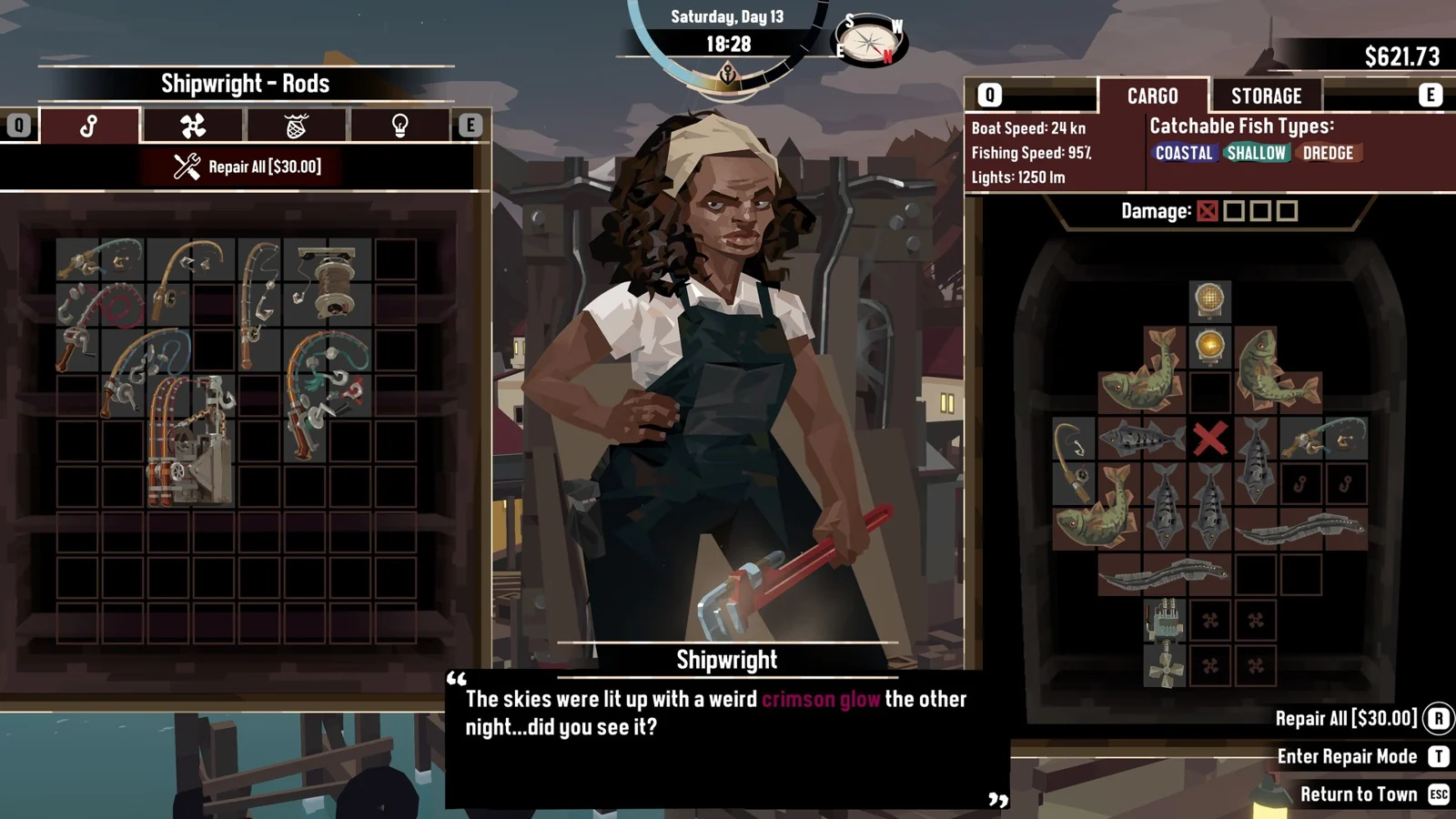
DREDGE turns the hold into a spatial puzzle. Fish, salvage and equipment occupy shaped areas, so two equally empty-looking holds may accept different catches. Before leaving, inspect the gaps left by installed equipment and carried items. A narrow isolated space is not the same as a clear rectangle when you find an awkwardly shaped fish.
Rotate before discarding
Use the current inventory controls to rotate and rearrange movable cargo before deciding it cannot fit. Preserve a useful contiguous area where possible. This is a planning principle rather than a single perfect layout: the next trip may favour material, a varied catch or a particular objective. A layout that served yesterday's route can be inconvenient for today's cargo.
Keep the function of installed space clear
Equipment has its own placement requirements, so the hold is not one unrestricted box. Plan the necessary fishing tools and propulsion first, then assess the remaining cargo area. Carrying equipment you will not use on the chosen route can reduce flexibility. Conversely, removing the tool needed for a target habitat makes a larger empty hold unhelpful.
Choose what the trip is for
An illustrative packing decision compares a short selling run with a material-collection trip. On the first, keep a readable space for fish you intend to sell soon. On the second, expect irregular salvage and leave room accordingly. Damage and spoiled cargo can alter the decision later. Do not treat every item as equally worth carrying just because it fits: route, freshness, current needs and the next dock all contribute to what a sensible hold looks like.
Try two cargo arrangements as a concept
Sketch the same hypothetical items in two empty grids: one packed tightly with scattered gaps and one preserving a larger connected area. Ask which additional shape each could accept. The exercise illustrates why geometry matters without claiming the drawing is a screenshot or a complete model of every in-game slot restriction. When using the real hold, follow the placement rules shown for installed equipment and cargo. The useful lesson is to consider the next likely object, not only the number of squares currently empty.