Start with the fishing spot
A visible shoal is not automatically catchable with every installed tool. DREDGE identifies fishing requirements by habitat or method. Read the spot's requirement and compare it with your equipment before spending time trying to harvest it. The practical question is whether the current boat can perform the job, not whether the location looks close enough to the starting islands.
Connect research with the next trip
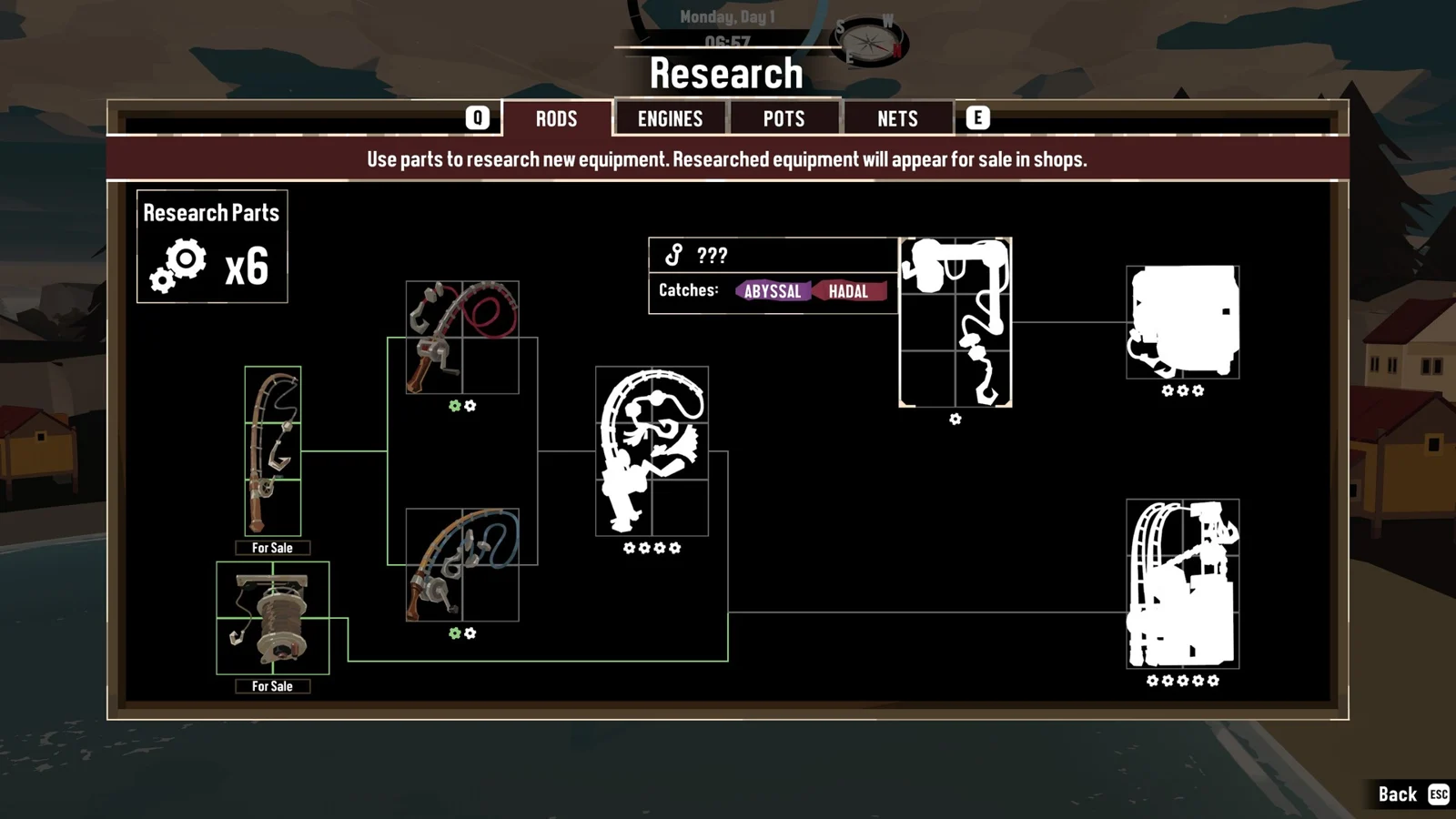
Research can unlock equipment options, but unlocking and fitting an item are separate steps. Consider the habitat you want to explore and the available installation space. A newly available tool is useful when it opens a route or task you actually intend to pursue. Buying an unrelated upgrade can consume resources without addressing the reason a particular spot remained inaccessible.
Give the map a second layer
Mark a place requiring different equipment and write a short note about the requirement. That turns an unsuccessful approach into a future itinerary rather than a wasted visit. Use your marker system consistently. The developer added multiple marker types specifically to make the map more expressive; you do not need to disclose a plot event to explain why a place belongs on a later route.
Test the whole preparation
Before departing again, check the fitted equipment, relevant spaces and the route back to a dock. An illustrative task is “return to a marked habitat after installing the tool that supports it.” The objective is access and understanding, not a guaranteed rare fish. Keeping habitat, tool and destination together makes the game's expansion feel like a series of practical possibilities while leaving its larger mysteries for the player to encounter naturally.
Put the tool beside the destination
A route card can connect a marked place with the equipment category it needs. Add the missing preparation as a separate line rather than repeatedly sailing back with the same unsuitable tool. Once the correct equipment is fitted, the next visit has a clear purpose even if the exact fish or catch size remains uncertain. This method lets the journal discuss progression through access and capability without identifying a major story reward or presenting a late-game revelation as a routine beginner instruction.